
Search Utah Warrant Records
Utah warrant records are public documents that track active arrest warrants, bench warrants, and search warrants across all 29 counties. The Utah Bureau of Criminal Identification runs a free statewide warrant search tool where you can look up records by name. County sheriff offices and district courts also keep warrant records for their own areas. You can search for Utah warrant records online at no cost through the state portal, or call your local sheriff or court clerk for help. This page covers how to find, check, and use warrant records in Utah.
Utah Warrant Records Quick Facts
Utah Statewide Warrant Search
The fastest way to check for warrant records in Utah is through the Utah Statewide Warrants Search portal. This free tool is run by the Utah Department of Public Safety Bureau of Criminal Identification. It covers all 29 counties. You just need a first and last name to run a search. The system pulls from the Statewide Warrants file, which gets updates from courts and sheriff offices across Utah. Results show the person's age, the offense, the case number, the city, and which court put out the warrant.
The Bureau of Criminal Identification keeps this database current with warrant records from every county in Utah. BCI has its main office at 4315 South 2700 West, Suite 1300, Taylorsville, UT 84129. You can call them at (801) 965-4445 if you need help with a search. Office hours are 8:00 AM to 5:00 PM, Monday through Friday. Be aware that scammers have called people from fake state numbers, claiming to be BCI officers and asking for warrant fine payments. BCI will never call you about warrants or ask for payment by phone.
The BCI homepage provides access to the statewide warrant search tool and other criminal justice resources used throughout Utah.
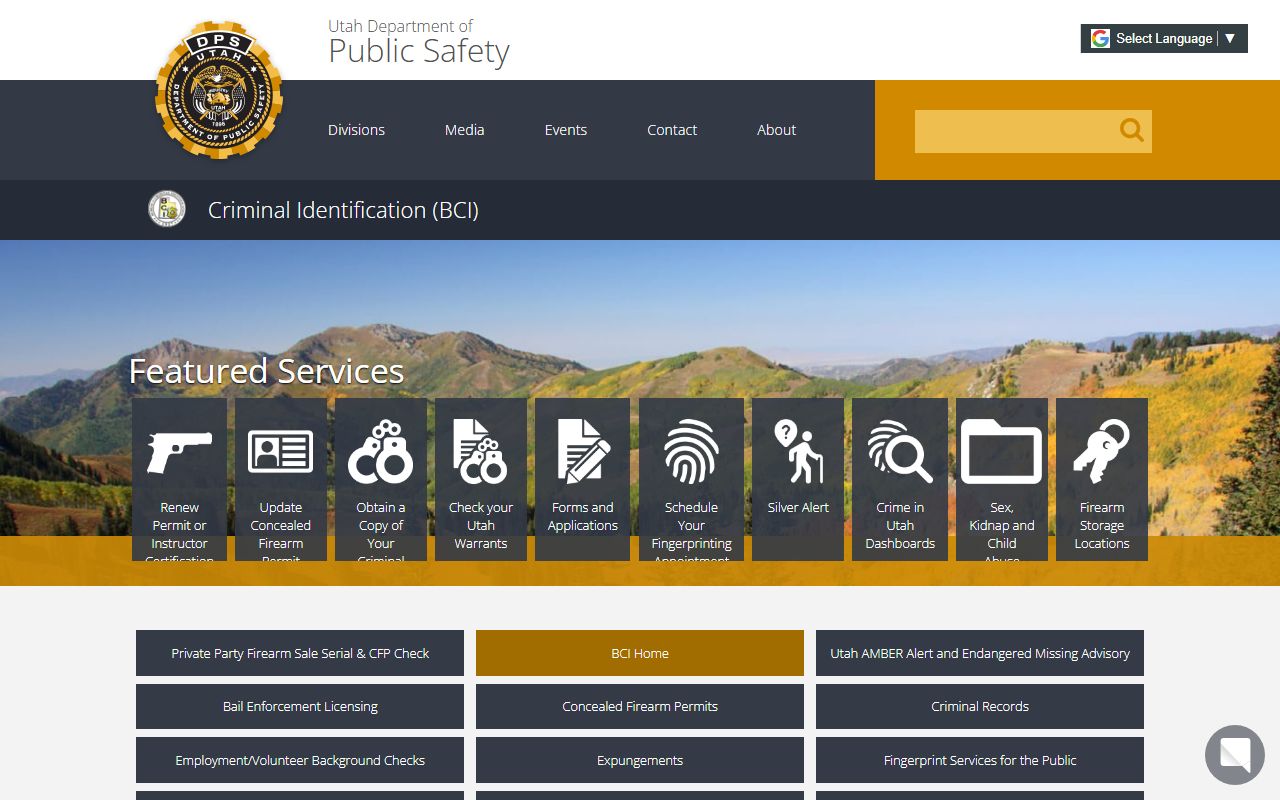
BCI also provides fingerprinting services by appointment for those who need to submit prints as part of a records request in Utah.
The Utah State Courts website is another key resource for warrant records. The courts run the XChange system, which is a fee-based database of statewide District Court criminal cases. XChange has case data going back 12 to 14 years. It shows charges, hearings, judgments, and sentencing details for cases across Utah.
Court records in Utah are generally public under the Government Records Access and Management Act, or GRAMA. Anyone can request to view them.
Types of Warrant Records in Utah
Utah courts issue three main types of warrants. Each one serves a different purpose and goes through a different process. All three types end up in the statewide warrant database once they are active. Knowing which type you are looking for can help you find the right records faster in Utah.
Arrest warrants come from a judge or magistrate when there is probable cause to believe a person has committed a crime. Under Utah Code § 77-7-2, only a magistrate who can hear criminal cases may sign an arrest warrant. These warrants stay active until the person is caught or the court pulls the warrant back. There is no time limit on them. A peace officer can arrest someone on a warrant even without holding a physical copy, as long as the officer knows the warrant exists per Utah Code § 77-7-11.
Bench warrants are the most common type in Utah. A judge issues a bench warrant when someone fails to show up for a court date. Under Utah Code § 77-7-19, these are typically issued 14 days after a court summons goes unanswered. Bench warrants cover everything from missed traffic court dates to skipped hearings on felony charges.
Search warrants let law enforcement search a place or seize items. Under Utah Code § 77-23-201, a search warrant must be based on probable cause. It has to describe the place and what officers are looking for. Unlike arrest warrants, search warrants expire. They must be served within 10 days per Utah Code § 77-23-205, and officers must return the warrant to the court within 3 days after they use it or it runs out.
The Utah Code Title 77 page shows the full text of criminal procedure statutes that govern warrant records throughout Utah.
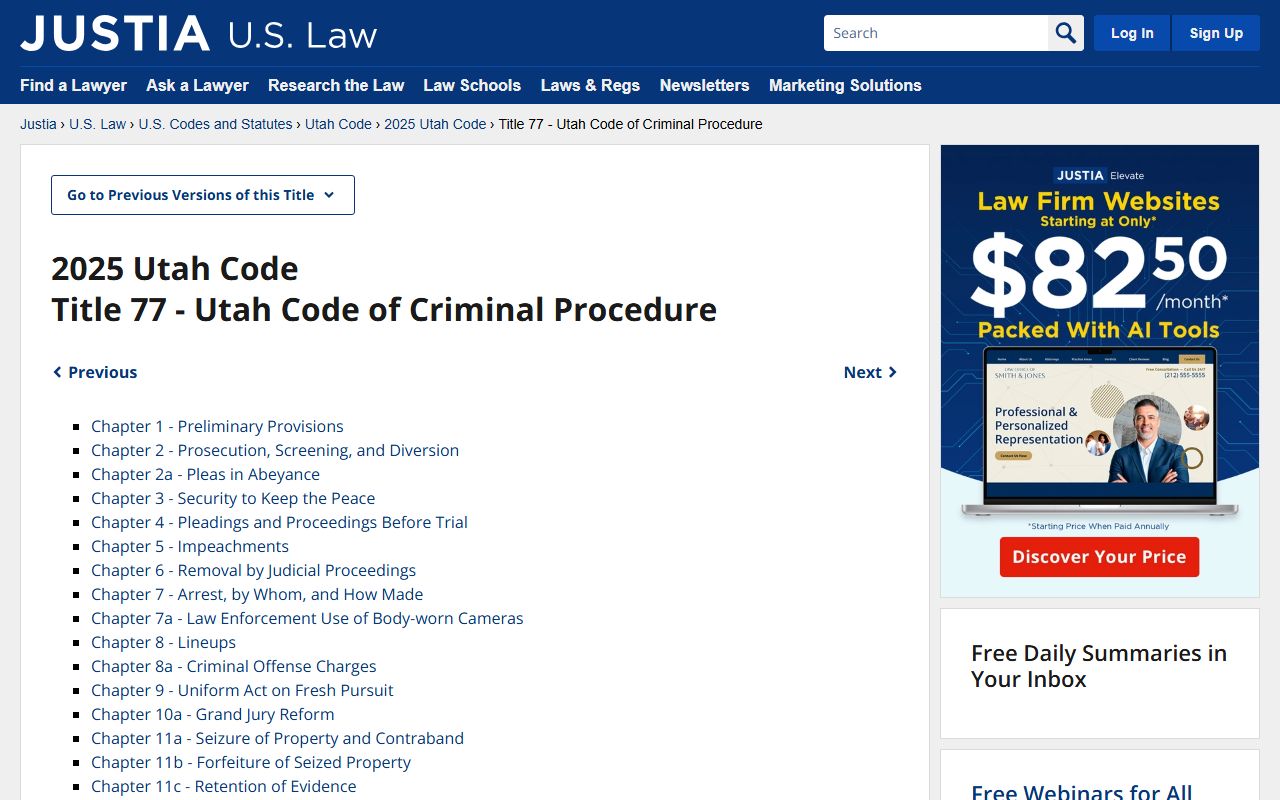
These laws apply to every county and city in the state of Utah.
How to Search Utah Warrant Records
You have several ways to search for warrant records in Utah. The method you pick depends on what you need and how fast you need it. Online searches are the quickest option for most people. In-person visits work best when you want a printed copy or need to talk to someone about a specific warrant record in Utah.
For online searches, go to the Utah Statewide Warrants Search. Type in the person's first and last name. You can add a middle name for better results. The system shows all active warrants that match. Click "view" on any result for more details about that warrant record. This tool is free and runs 24 hours a day, 7 days a week.
To search in person, visit your county sheriff office or courthouse. Bring a valid ID. Give the clerk the full name and date of birth of the person you are looking up. Staff can check the local database and the statewide system. Most offices are open from 8:00 AM to 5:00 PM on weekdays. You can also call ahead. For the statewide office, reach BCI at (801) 965-4445 or email support@utahpost.org.
The Utah Courts criminal justice page has resources for people who need to look into court cases tied to warrants in Utah.
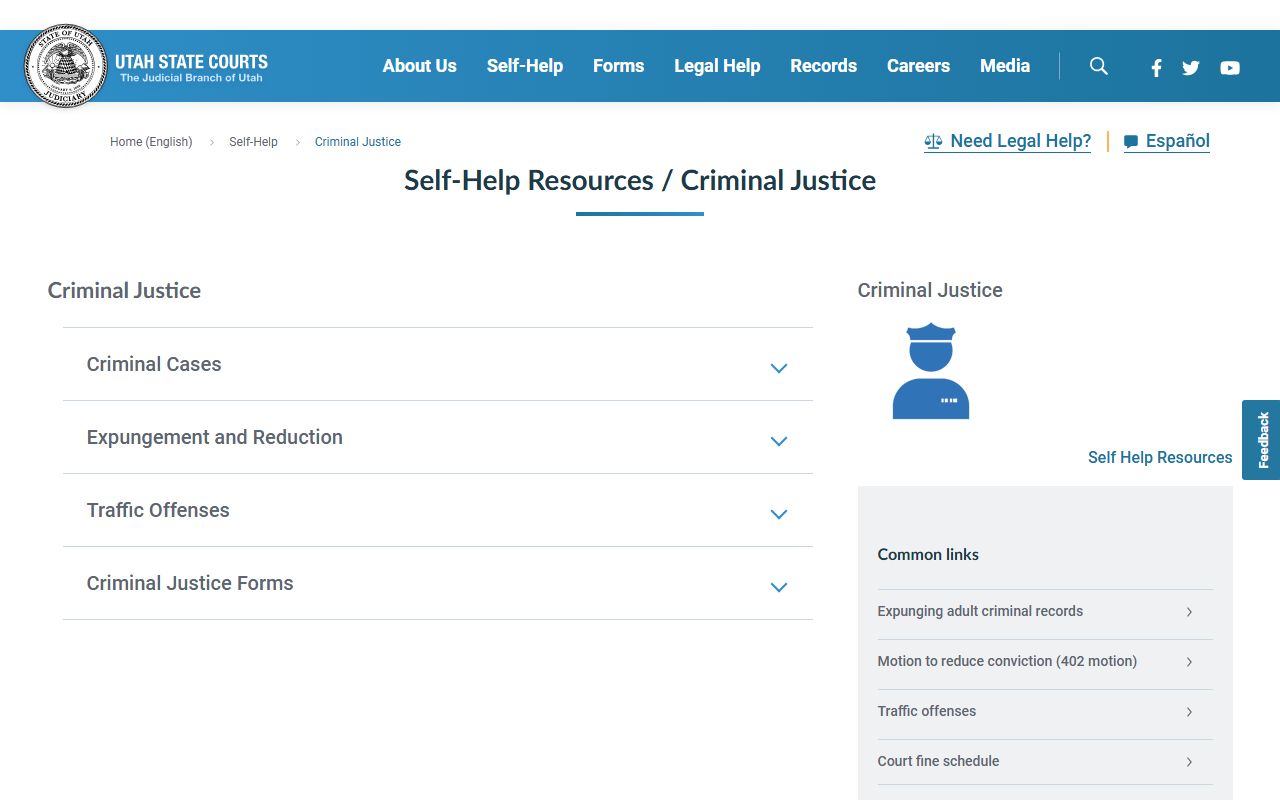
This page also has guides on expungement and resolving old cases in Utah.
Note: The statewide warrant search only shows active warrants in Utah. Once a warrant is recalled or served, it drops out of the public database.
Utah Warrant Record Laws
Utah law sets clear rules for how warrants are issued, served, and tracked. The Utah Legislature has passed statutes that cover every step of the warrant process. These laws protect both public safety and the rights of the person named in the warrant. All warrant records in Utah must follow these rules.
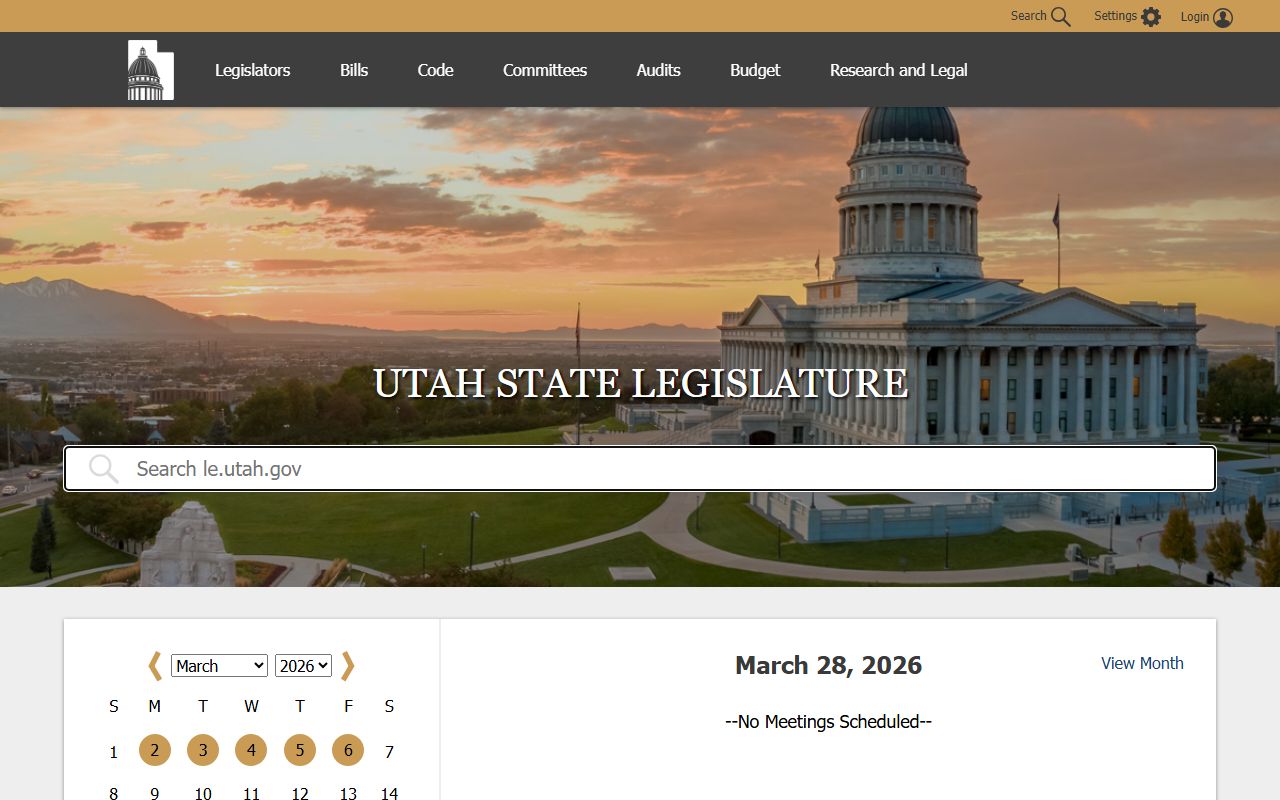
The Utah Legislature maintains the full text of all state laws, including those that control warrant records.
Public access to warrant records falls under GRAMA, the Government Records Access and Management Act. Under Utah Code § 63G-2-201, all government records are public unless a specific law says otherwise. This means most warrant records are open to anyone who asks. Agencies must respond to records requests within 10 business days, or 5 for urgent requests per Utah Code § 63G-2-204. Some warrants may be sealed if they involve an ongoing case or could put someone at risk. But most are open to the public in Utah.
Utah Code § 77-7-5 says that arrest warrants can be served any time of day or night. They do not expire. Under Utah Code § 76-1-302, the statutes of limitations for criminal offenses are 2 years for most misdemeanors and 4 years for most felonies. Murder has no limit. But issuing a warrant pauses that clock, so even old warrants can still be enforced in Utah. Law enforcement must enter all warrant records into the Utah Criminal Justice Information System so other agencies can see them.
Utah Code § 77-23-209 requires that all search warrant records be kept on file. Courts must hold onto these records for review and public access. Transparency rules under Utah Code § 53-25-301 also require reporting on certain types of warrants, including reverse-location warrants and forcible entry search warrants used in Utah.
Criminal History Records in Utah
The BCI Criminal History Records page is where you go for Utah criminal history information. BCI keeps records of arrests, charges, and convictions from across the state. You can request a copy of your own record or check if a record is incomplete or wrong. The cost for a Utah criminal record check is $20, with that fee going up starting July 1, 2025.
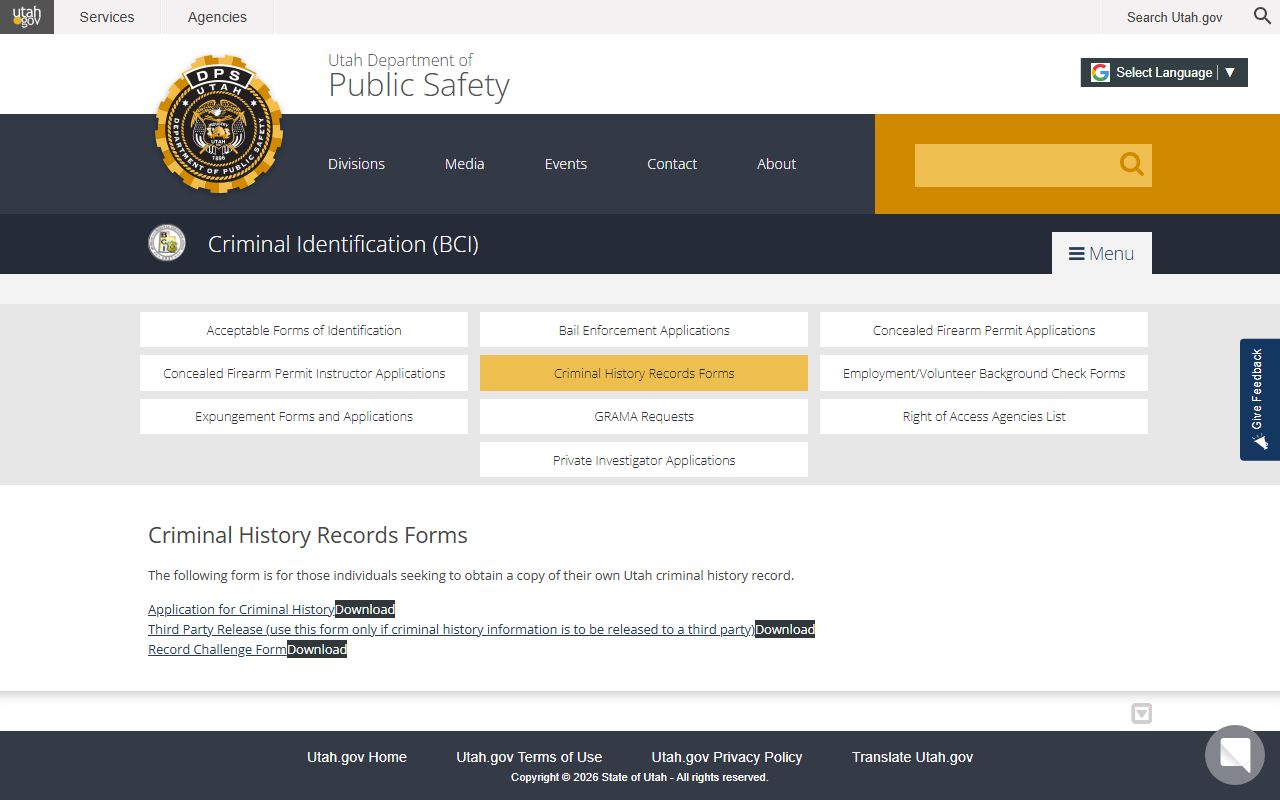
BCI provides criminal history access for individuals and authorized agencies throughout Utah.
BCI also handles fingerprint-based checks. Livescan, digital, and wet ink prints are all available by appointment at their Taylorsville office. Fingerprinting costs $20 as of 2025. These checks can reveal warrant records and other criminal history tied to a person's prints. The FBI Identity History Summary Checks program lets you request a national rap sheet for $18 through the FBI. This covers federal records as well as state records from Utah and all other states.
The Utah Courts offer resources for people who want to clear old records. The criminal justice self-help section covers expungement. Utah has a Clean Slate law that provides automatic expungement of some qualifying records. BCI handles expungement applications and can tell you if you qualify. Juvenile warrant records follow different rules and are usually sealed under Utah law.
Note: Criminal penalties and civil fines can apply if someone gets BCI records in a way that breaks the law or gives them to people who should not have them.
Utah Corrections and Warrant Records
The Utah Department of Corrections tracks offenders under state supervision. This includes people on parole and probation across Utah. When someone violates the terms of their release, the Department can issue a warrant for their arrest. These parole and probation violation warrants show up in the statewide database alongside other warrant records.
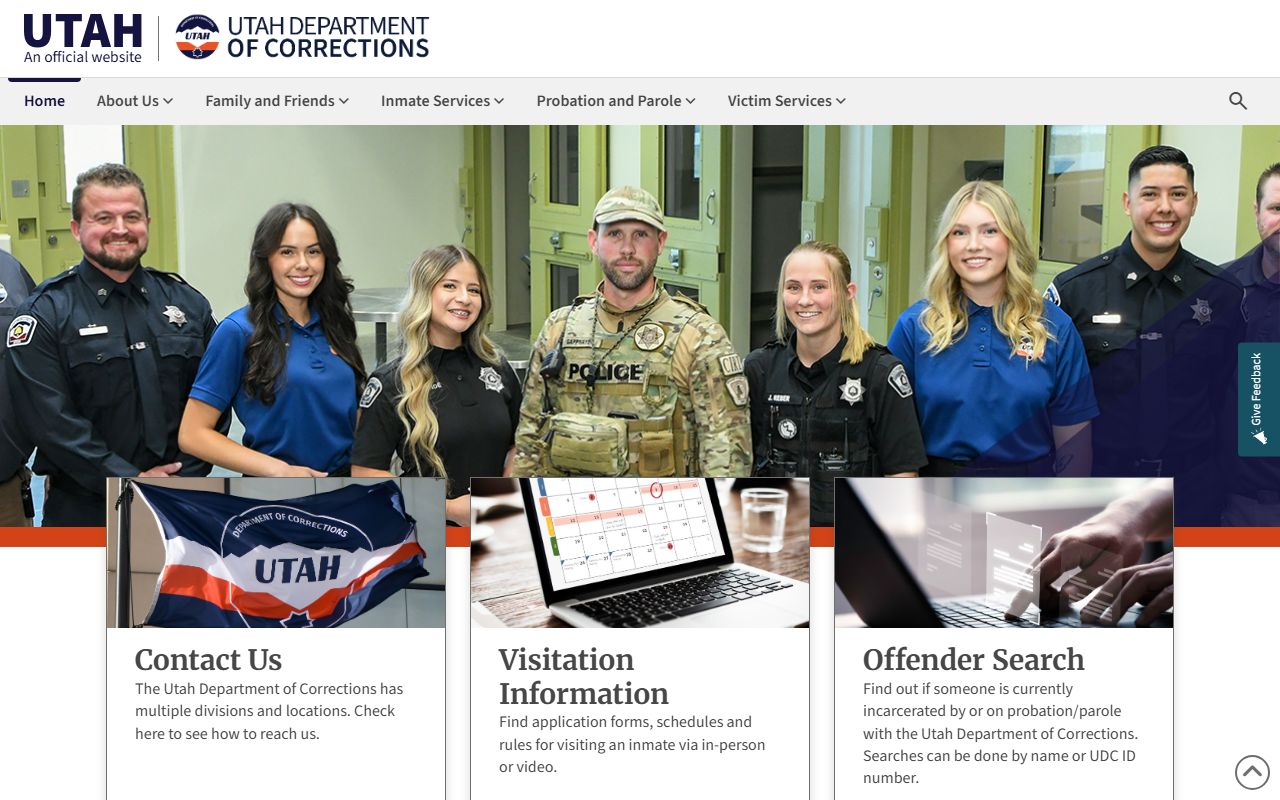
The Department of Corrections also runs the statewide sex and kidnap offender registry for Utah.
The Adult Probation and Parole division works with county jails through the County Jail Program. If an offender has a warrant, that information gets shared with local law enforcement. The Department coordinates with sheriff offices in all 29 Utah counties to find people with active warrants tied to supervision violations.
Federal Warrant Records in Utah
Federal warrants come from a different system than state warrant records in Utah. The United States District Court for the District of Utah handles federal cases. This court sits at 351 South West Temple in Salt Lake City. Federal warrants cover crimes like drug trafficking, bank fraud, and other violations of federal law. The United States Marshals Service runs warrant enforcement for the federal courts in Utah, and they can be reached at (801) 524-5693.
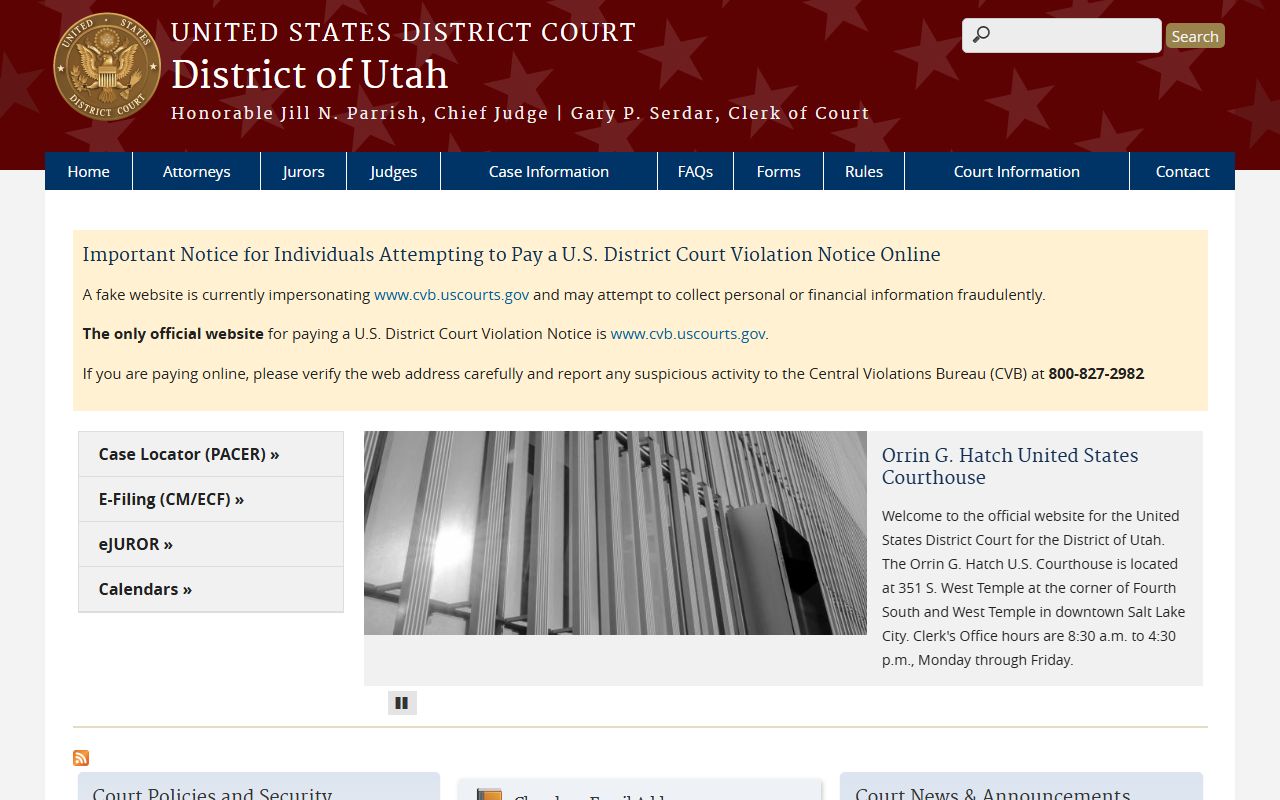
Federal court records follow separate rules from state warrant records in Utah.
The PACER system gives you access to federal court records. PACER stands for Public Access to Court Electronic Records. You can search by case number, party name, or filing date. The system charges a small fee for most searches. Federal warrant records are not always public the way state warrants are, but case filings and docket entries can show when a warrant has been issued through the federal system.
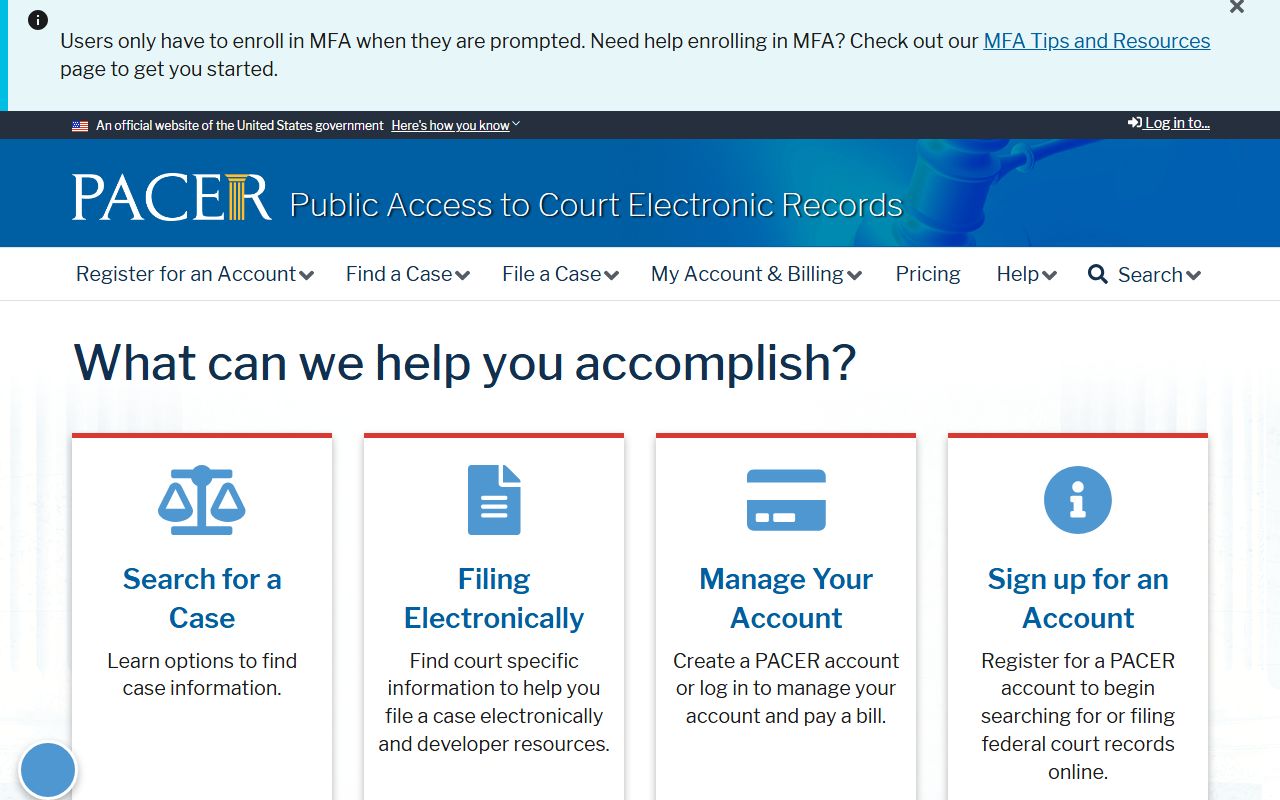
PACER covers all federal courts, including the District of Utah.
Note: State and federal warrant records are separate databases in Utah. A search on the state portal will not show federal warrants, and PACER will not show state warrants.
Browse Utah Warrant Records by County
Each county in Utah has its own sheriff office that handles warrant records. Pick a county below to find local contact details and resources for warrant records in that area.
Warrant Records in Major Utah Cities
City police departments work with county sheriffs on warrant records in Utah. Pick a city below to learn about local warrant resources and which county handles filings in that area.